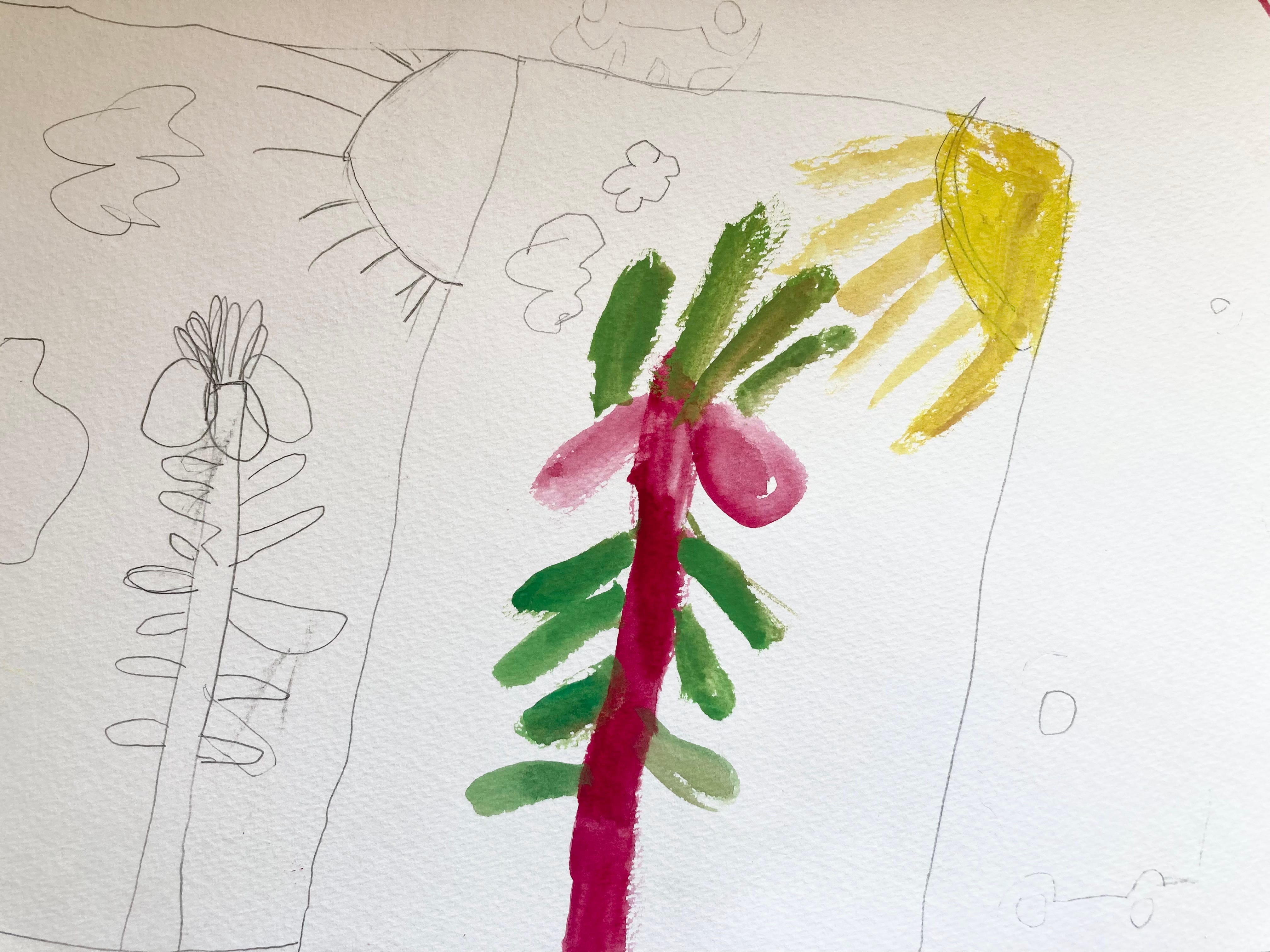
Imaginary Homelands
Back in Bombay

When people ask me where I am from, it’s easy to say I am from Bombay. Although it’s called Mumbai now, when I go back to India I don’t just return to the city I lived in the majority of my life, but to the very same apartment my family has lived in since I was born. I am unequivocally from here, here. In Hindi, the word desh (देश) means country, but has this connotation of homeland, and shares a root with the word dishaa (दिशा), which means direction. The homeland is the place that is pointed to, where you indicate towards when someone asks where you belong unequivocally.
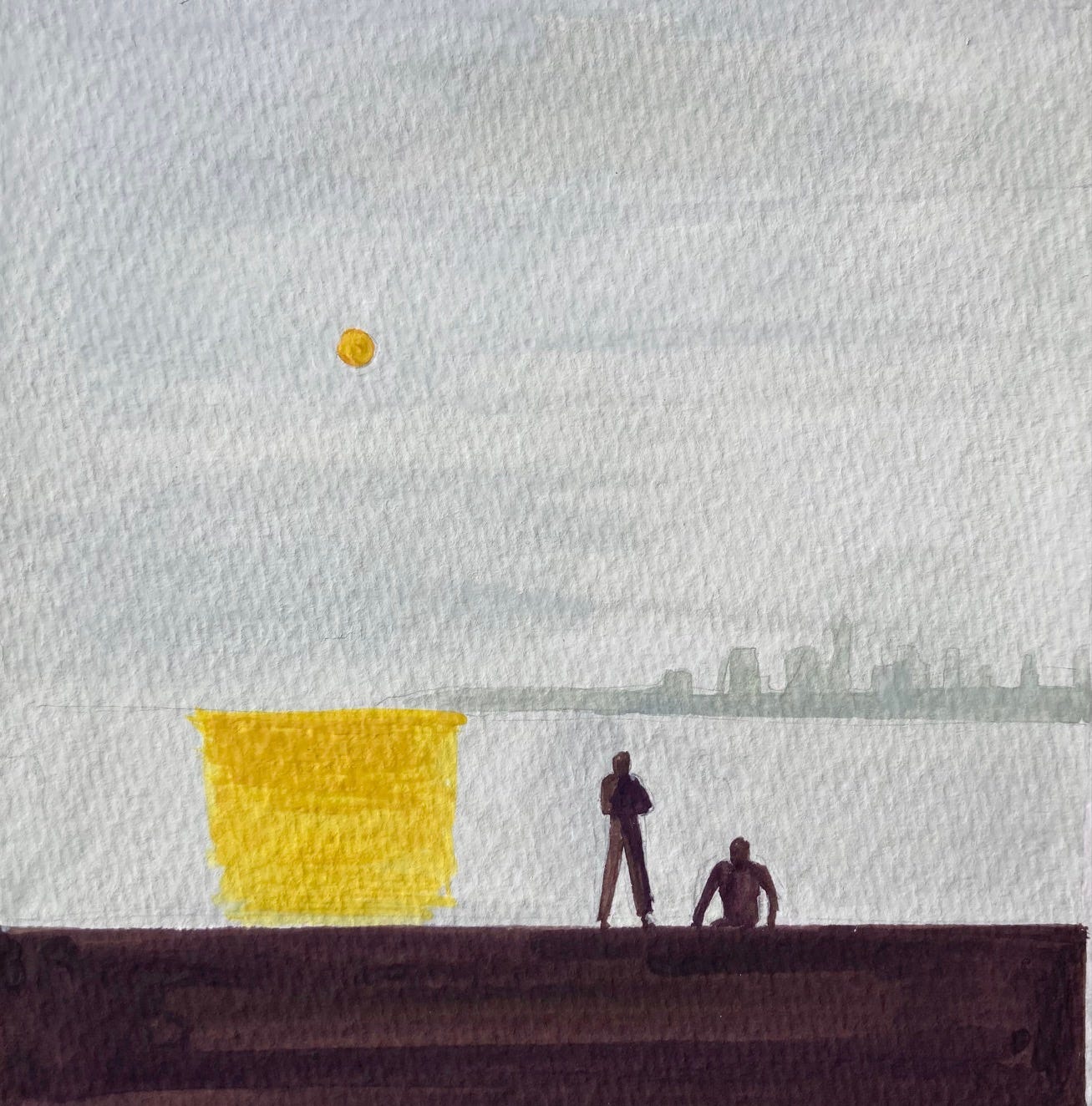
Marine Drive (gouache on paper, 10 x 10)
There are obviously a lot of shadows that fall across this word, homeland, a darker history that complicates any easy nostalgia. In apartheid South Africa, “homelands” was the sinister official name given to Bantustans, those fragmented territories to which Black South Africans were forcibly assigned, pseudo-nations invented by the state to strip people of citizenship in the land of their birth. To assign someone a homeland could be a way of taking their home away.
The term “imaginary homelands” comes from a 1982 essay by Salman Rushdie, in which he also reflects on a return to Bombay, where he is from, after years living away from India. The beginning revisits well-trodden terrain of the experience of emigration, in which memory has been quietly constructing its own Bombay all along, filling in what time has eroded with materials drawn from longing rather than fact. What remains is a Bombay of fragments, scrambled identities, but Rushdie reminds us that displacement is experienced in time just as much as in space. “The past is a country from which we have all emigrated”, he writes. Our imaginary homeland is our past, for people that move just as much as for people who stay in the same apartment their whole lives.
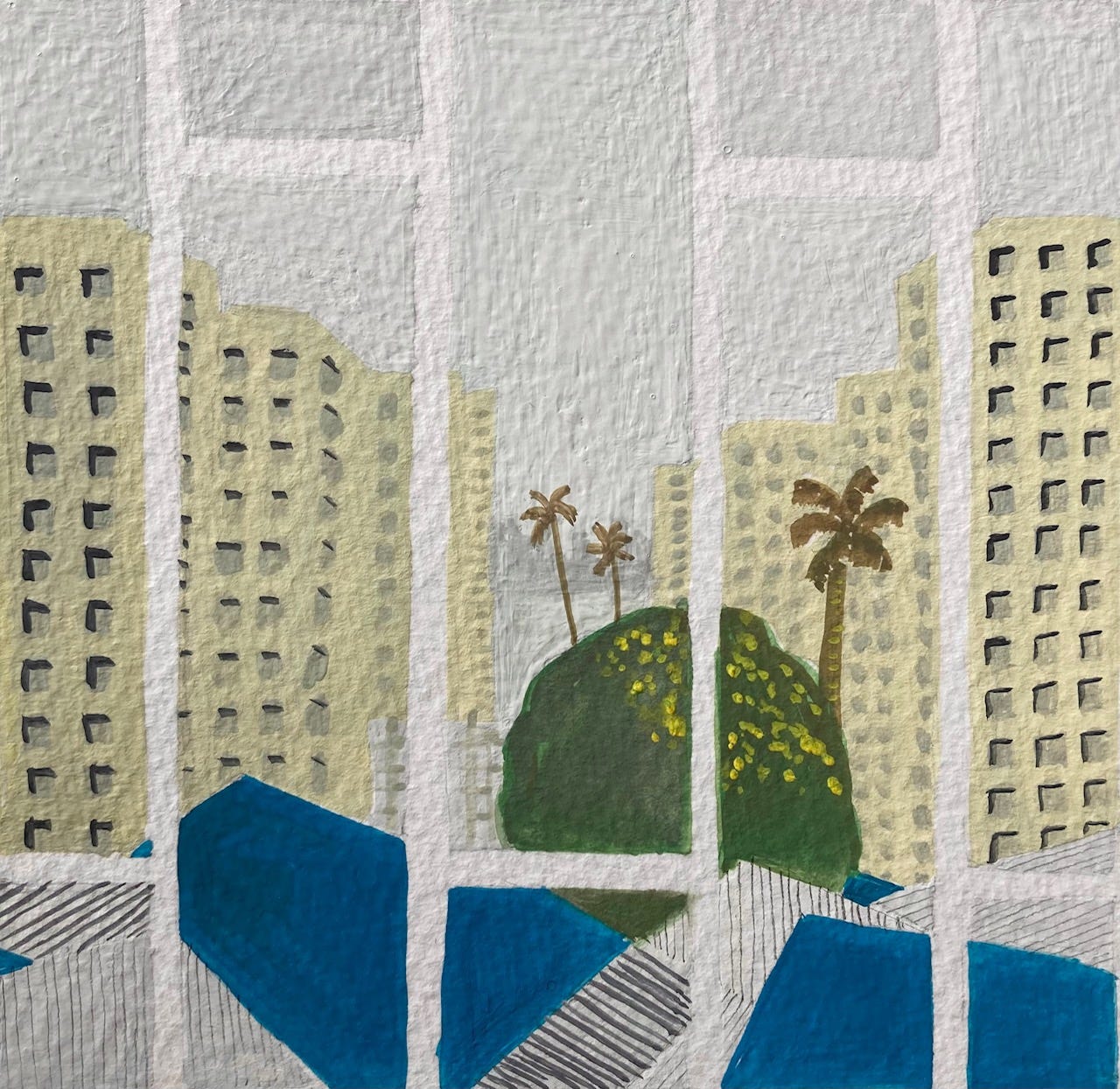
Bandra (gouache on paper, 10 x 10)
This imaginary homeland is stored in the body, and it returns only involuntarily, uncalled, as a kind of grace or invasion. We can only receive it as a gift we did not ask for, in moments we cannot orchestrate. The imaginary homeland is perpendicular to us, pressing against the membrane of the present, waiting for the accidental key, like rusty bars on a window, that will unlock it for a moment before it seals itself away again. This is the only place from which I can paint when I am back here.
There is a German word (there always is), Heimat, which means something like homeland, but more intimate, carrying within it the particular smell of your childhood kitchen and the specific angle of afternoon light in a room you once knew by heart. And then there is Umwelt, which means “environment” or “surroundings” but really names something stranger: the perceptual world available to a given creature, the slice of reality that its senses carve out from the blooming confusion of everything. A tick’s Umwelt is the texture of mammal fur; a Mumbaikar’s is the sea glimpsed suddenly, the talent for finding privacy in a humid crowd.
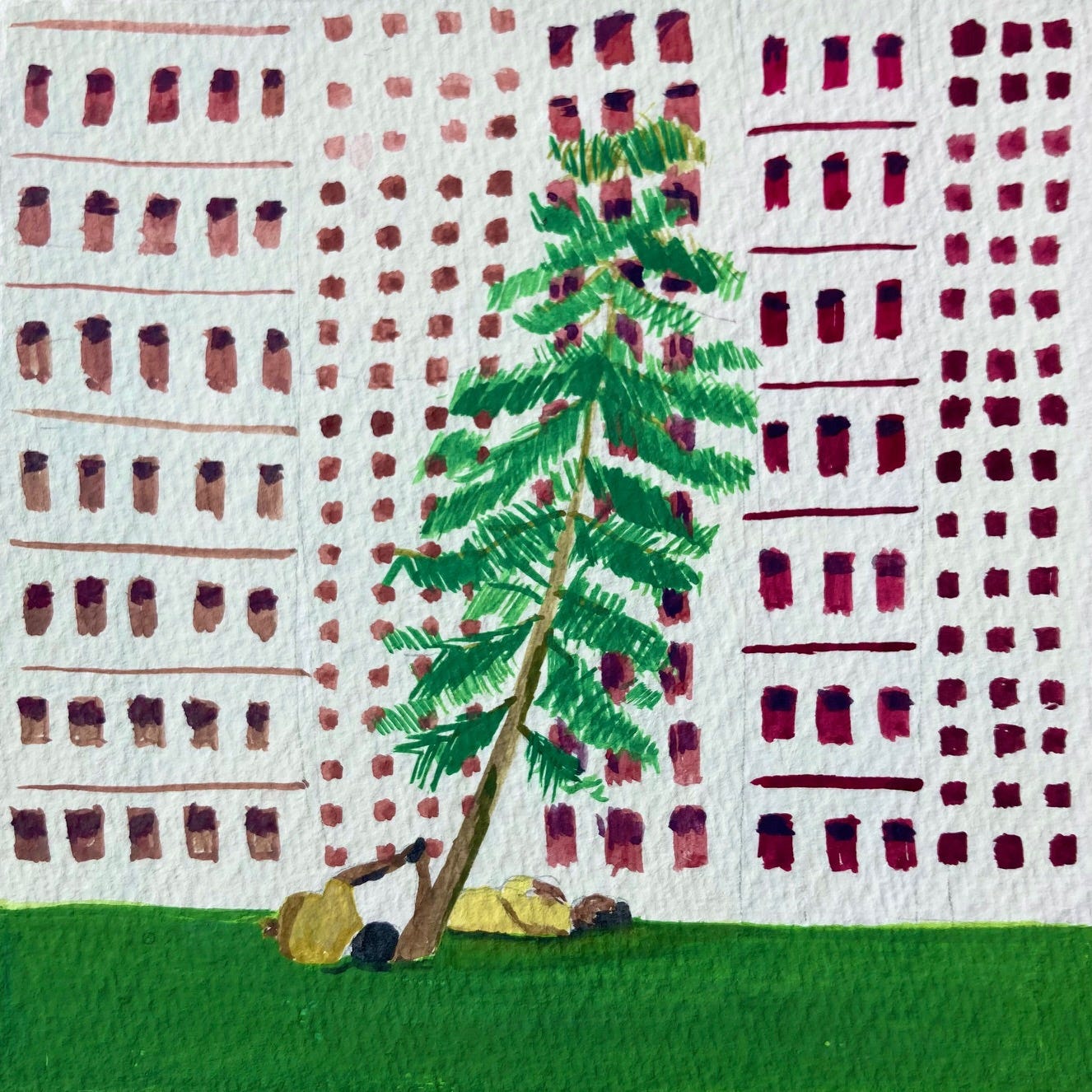
Horniman Circle (gouache on paper, 10 x 10)
When you return to places from your past, you discover that these two concepts have quietly diverged. The Heimat persists in memory as a kind of promise you can return to—walking to the shop on the corner, the particular rhythm of conversations you get back into seamlessly. But your Umwelt has been recalibrated by other places, other lives. The city is the same city, apparently, but you are not the same sensing creature, and so the world it offers up to you has shifted. Heimat is a story you tell yourself, while Umwelt is the humbler truth of what your eyes and ears and skin actually find. The gap between them is the precise measure of how time works on us, slowly and imperceptibly teaching us to perceive differently.