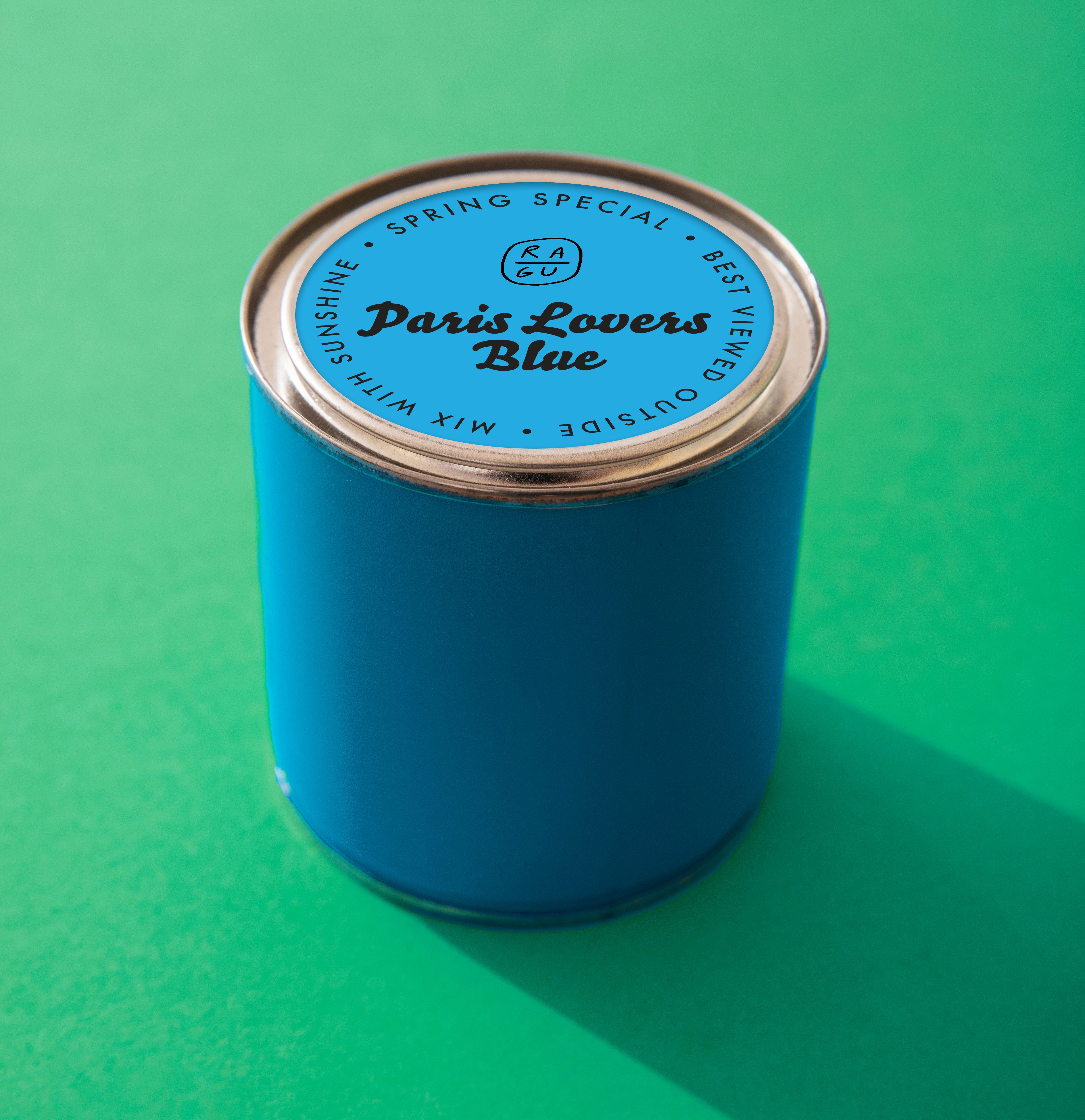
Paris Lovers Blue
Capturing Colour

There are days in Paris, in late April or early May, when the sky achieves an impossibly saturated, magnificent blue. Winter gets a pale wash grey, the summer heat a hazy white, but late spring conjures up a blue that presses down with the confidence of pigment squeezed straight from the tube. You look up and feel that the sky is closer than it should be, almost a solid surface you could touch.
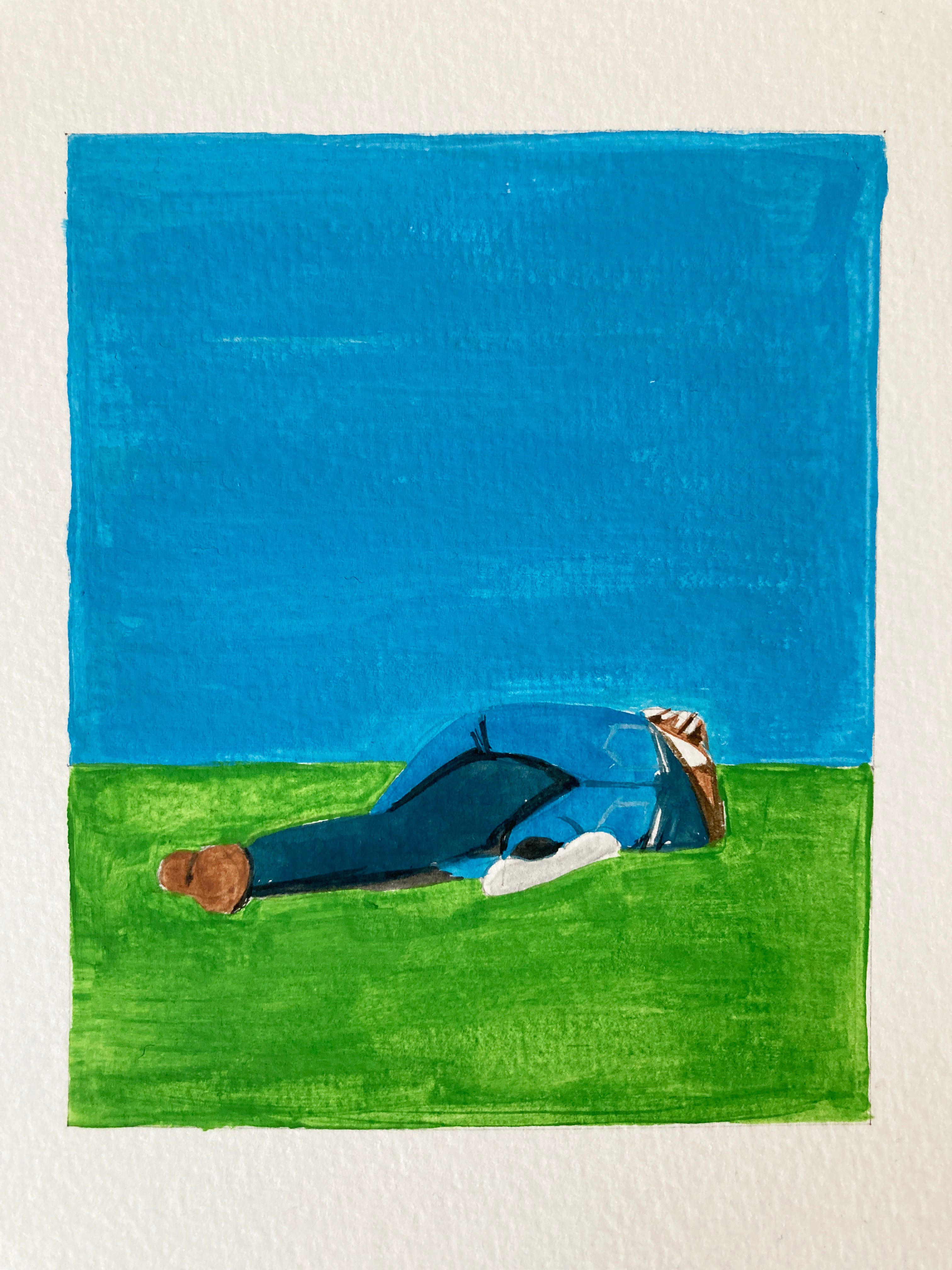
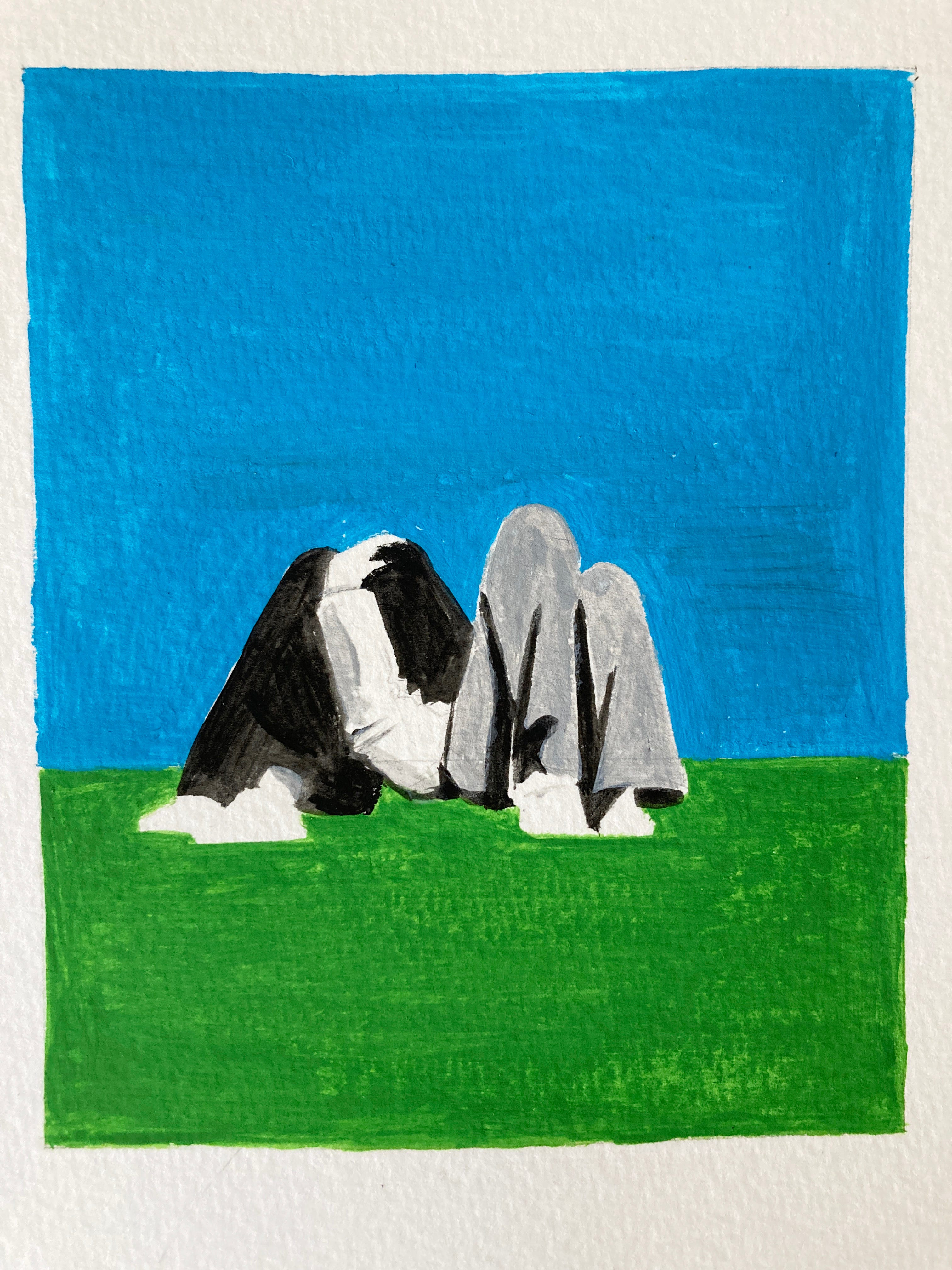
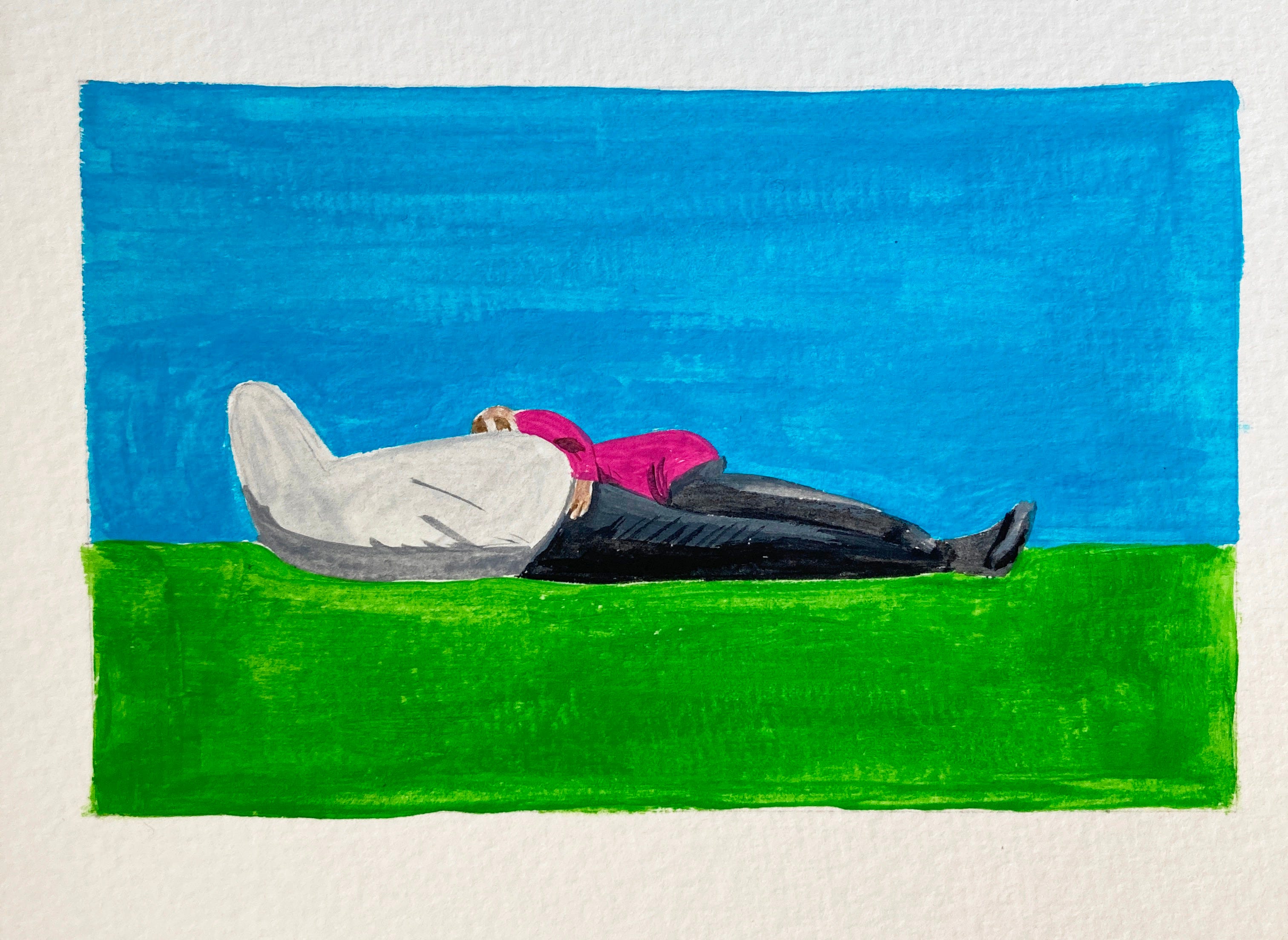
Parisians, who complain about everything, don’t complain about this. They simply go outside, tilt their faces toward it, and for a few weeks the café terraces overflow with people pretending to drink coffee while actually drinking light. Park lawns, pristine greens not yet yellowed by the dry summer spells, become covered with bodies abandoned to the ground. They lie there for hours, entangled, perhaps with someone’s head resting on someone’s stomach, performing public intimacy under a blue sky that watches over and approves.
It feels impossible to capture such a blue and reproduce it. A few years ago, India’s National Institute of Design (NID) invited me to teach a class called “Elements of Colour”, and the history of pigments reveals that blue may actually be the warmest one. For centuries, painters had only a handful of options to choose from, like azurite or indigo, but ultramarine was the one that really held the luminous depth of the sky in it. It cost more than gold by weight, because it came from lapis lazuli, which came from the mountains of Badakhshan in Northeastern Afghanistan. Miners extracted it by following veins of blue deep into the rock, which was then heated with flames before being doused with cold water to crack it open. From Badakhshan the raw stone traveled across passes into Persia, then onward to the trading posts of the Levant. By the time a piece of lapis lazuli reached a painter’s workshop in Florence or Bruges, they would grind it with mortar and pestle, mix it with wax and resins, then wash it to separate the pure blue from the gray impurities. What remained was a powder of extraordinary intensity, worth the journey and the fortune it commanded. It would only be used on the most holy subjects. The robe of Bellini’s Virgin Mary was blue because the mountains of Afghanistan are blue, and because people carried that blue across the world to place it in the hands of someone who would represent the heavens with it.
By the 20th century, synthetic ultramarine had already been invented—in Paris, of all places—and Yves Klein could tweak it endlessly like a mad alchemist to invent his famous International Klein Blue, an intense matte ultramarine. The sky had also been part of that journey, as he recounts in his 1961 “Chelsea Hotel Manifesto”:
“As I lay on the beach, I began to feel a hatred for the birds flying to and fro in my beautiful cloudless blue sky, because they were trying to pierce holes in the greatest and most beautiful of all my works.”
The auteur in all his glory, Prometheus capturing colour and making it synonymous with his name, as if that sky had given it exclusively to him.
A controversy erupted a decade ago when Anish Kapoor acquired exclusive artistic rights to Vantablack, an engineering-grade paint that absorbs 99.96% of visible light. A paint so dark that objects coated in it appear as flat voids, black holes cut in your field of vision. Because Kapoor had an exclusive license for the blackest black paint, an artist called Stuart Semple responded in protest by creating the “pinkest pink” paint, and making it available to everyone in the world—except Anish Kapoor. My Bombay brethren responded by posting on social media a photo of his middle finger dipped in the jar of pink he was not allowed to use. Like most things in contemporary art, the feud became a performance, a winking joke.
Kapoor may have thought he was perpetuating a long tradition of exclusivity in use of colour, like with medieval ultramarine, but he was just continuing the fraudulent logic of what is today called the “art world”, organised around a small number of brand name artists. It is a luxury industry that occasionally produces art, and the artists who flourish in it are those who understand themselves as luxury producers. As signatures and guarantors of wealth, these artists lend their names to speculative assets to ensure money is laundered efficiently across the world. If you can erect a phallic monstrosity in the middle of a European capital and give it value by slapping your name on it, why not possess the exclusive legal right to represent a colour?
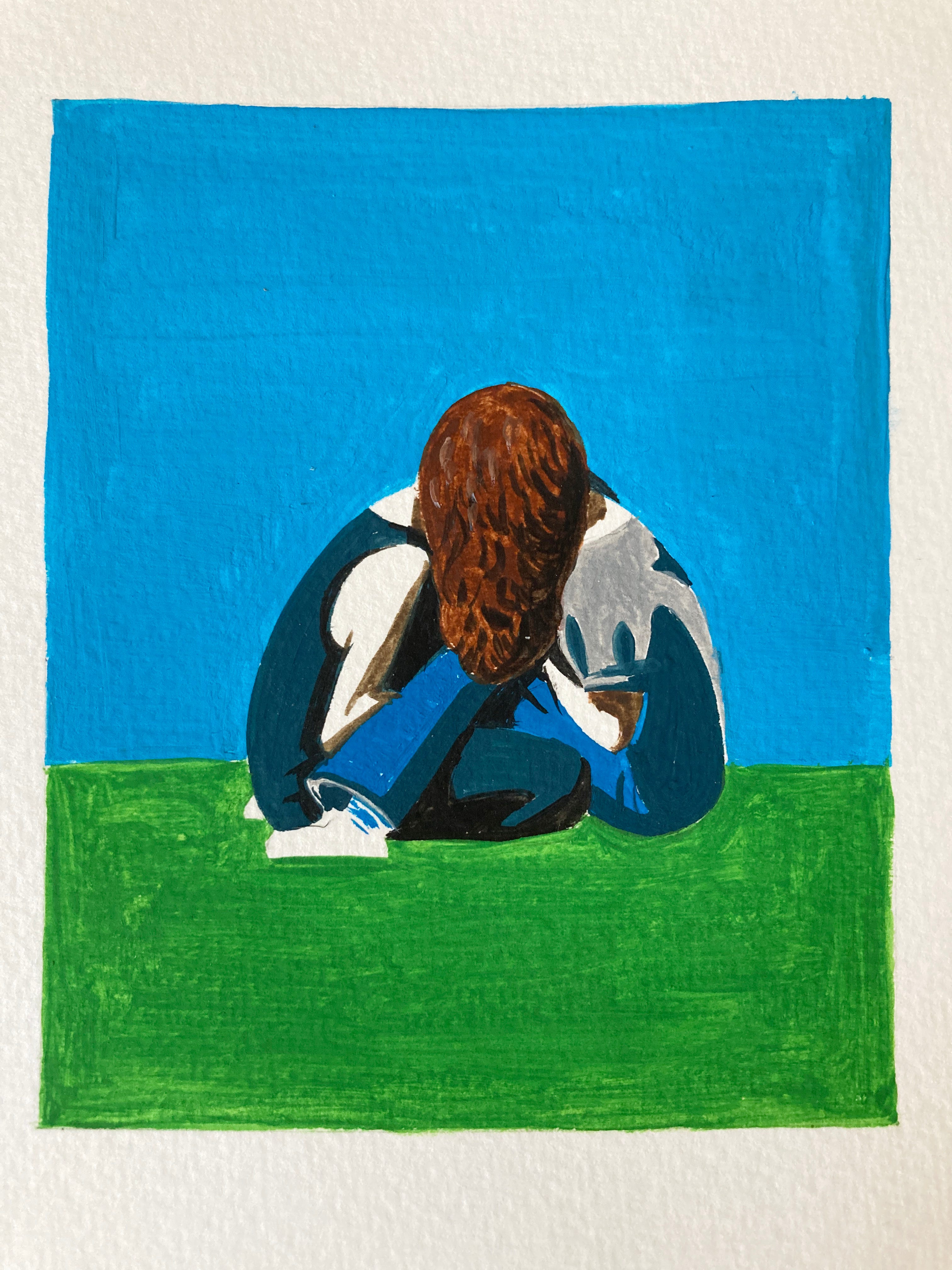
In the spirit of every painter who has ever wanted to chase the ownership of a colour, I hereby propose the creation of “Paris Lovers Blue”. The pigment is the precise saturation of the sky above Parisian park lawns on the first warm Saturday in May, when couples are embracing and nobody has work tomorrow because tomorrow is the umpteenth May bank holiday in France. It is composed of light, of the willingness to love in public, of the relief of having survived another winter, and of the shade that the inside of one’s eyelids becomes when the sun is bright enough to see through them. I am offering it free of charge to all artists, including those I dislike. Anish Kapoor is welcome to it, but not to dip his middle finger in it.
The actual Paris sky does not care about any of this, its blue already saturated beyond reason, daring you to look up. Enjoy it while it lasts.