
Self-Portrait as a Lemon
Dead Nature, Still Life

After my first maternity leave, when I was trying to muster up creative energy while beset by severe sleep deprivation, I started sketching daily ballpoint pen portraits of the baby. Aside from the quotidian practice of drawing, it also helped me learn anew how to see and represent. The light hitting her cheek, the shadows under the hair. This time around though, towards the end of my latest—and last—maternity leave, I started sketching objects more, with the same attention I was giving to living beings.
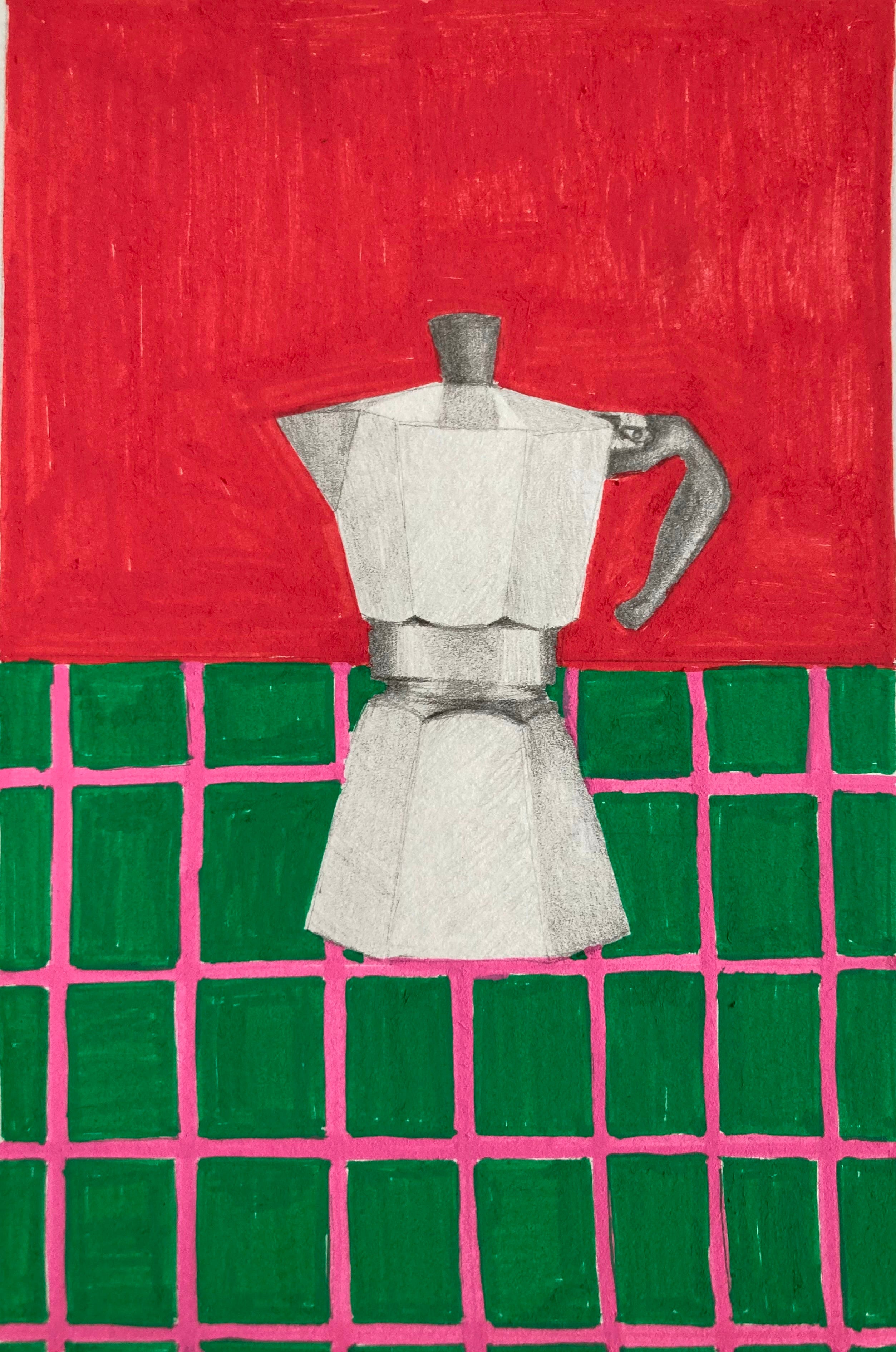
There is less life in a coffee pot or in a fruit. The still life is a meditation on what remains after life has withdrawn, which is why the French call it nature morte, dead nature, which tells a different truth than the English name. Every still life is a memento mori pretending to be a study in composition, hence the skull lurking in many of them. Apparently the French name comes from the pejorative view of this art. In 1667, André Félibien suggested a ranking of painting genres: allegory on top, followed by historical scenes, then portraits, landscapes, and finally dead nature, the least noble of all, “representing dead things without movement.”
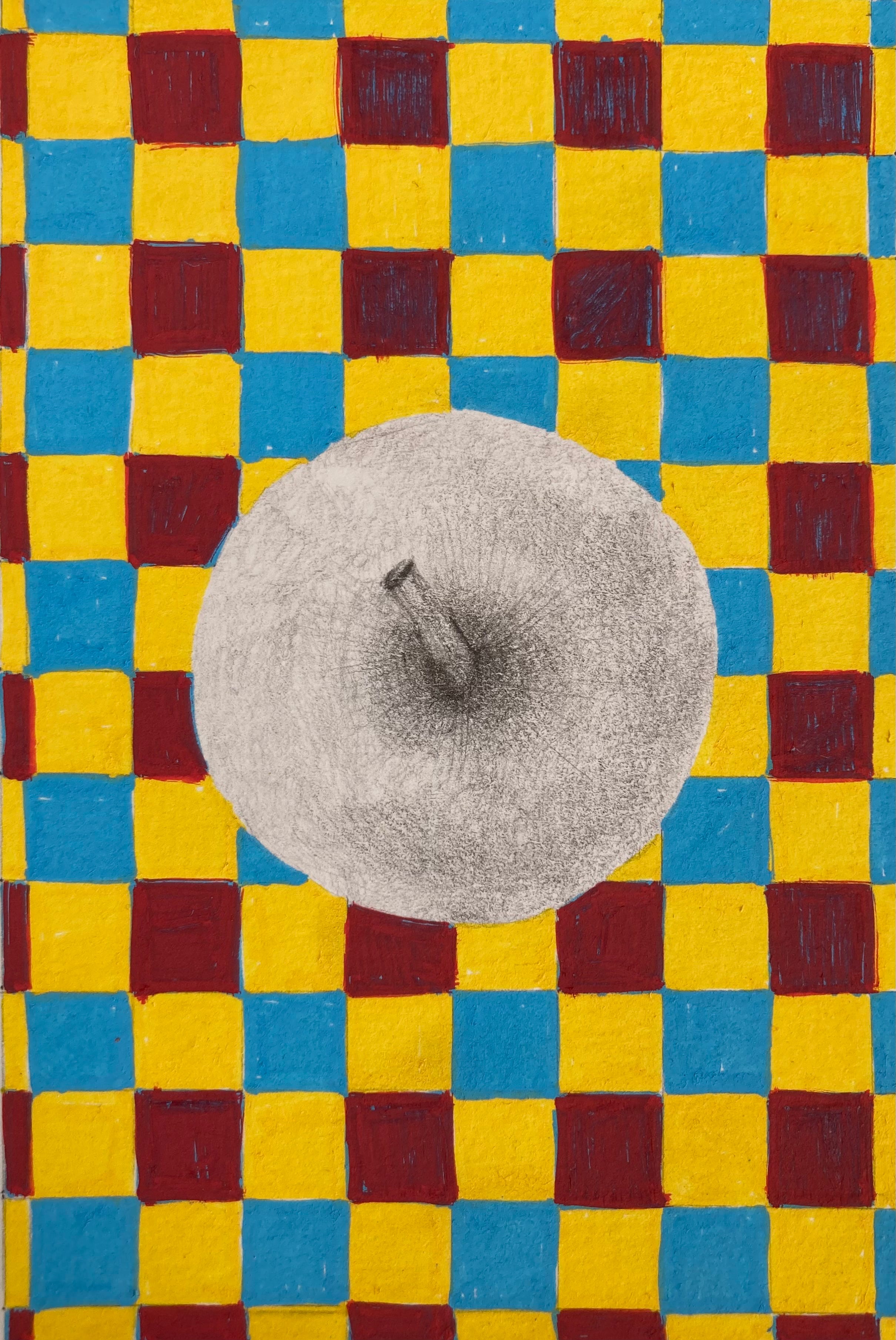
Giorgio Morandi spent his whole life painting bottles. The same bottles, or nearly the same, arranged and rearranged on a tabletop in Bologna, covered in dust he refused to wipe away because the dust softened the surfaces and made them more themselves. His palette narrowed to ochres and greys and off-whites, the colours of things left alone for a long time. Looking at a Morandi painting is like listening to someone speak very quietly about something that matters to them deeply. The bottles are bottles, not symbols or metaphors for something else. In his attention to them, however, in the solemnity of his looking, they become vessels for a kind of meaning that cannot be translated into words. Morandi makes you understand that, regarded with enough patience, the overlooked object will yield something inexhaustible.
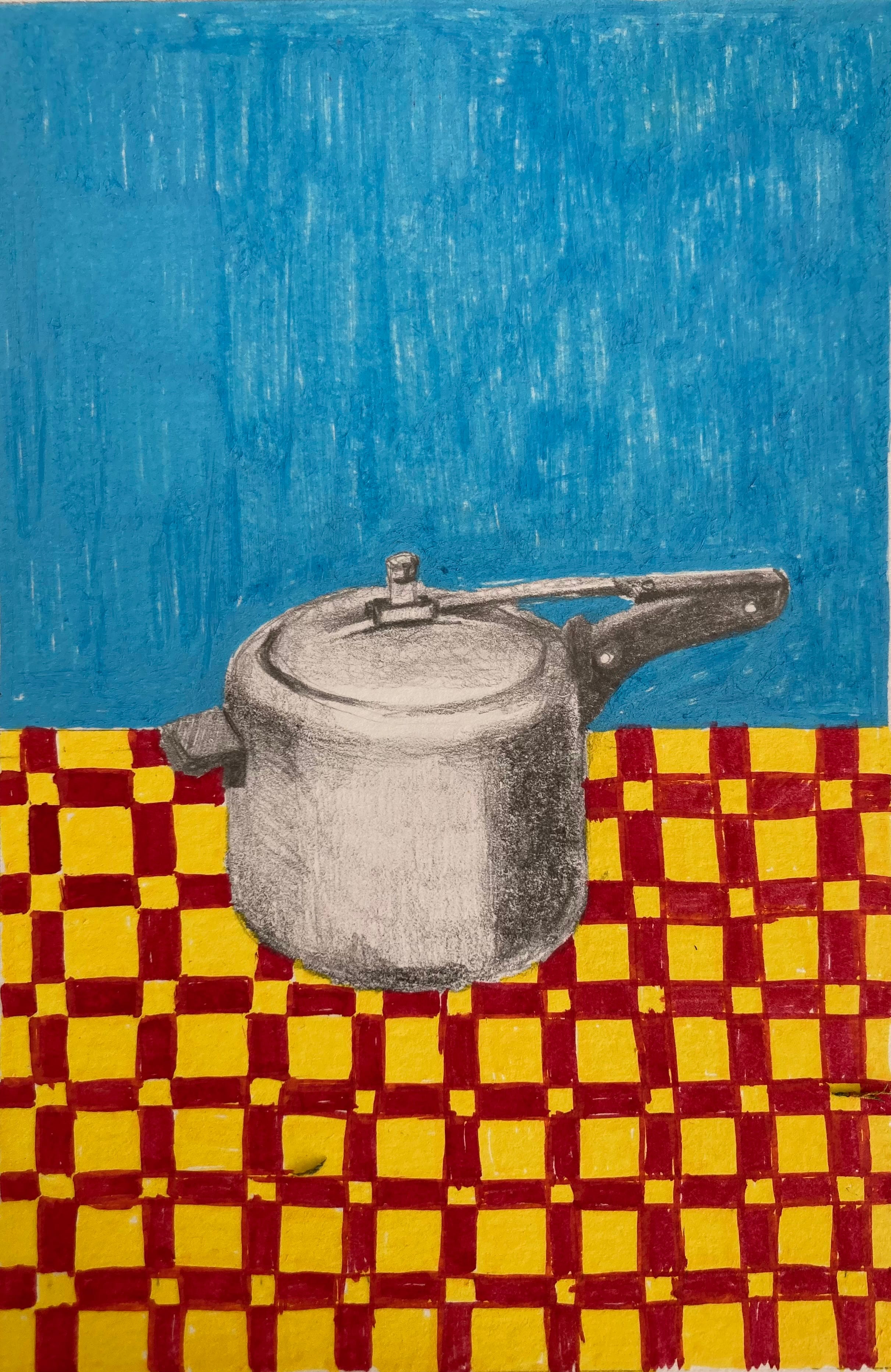
I have been thinking about this after watching William Kentridge’s delightful mini-series, Self Portrait as a Coffee Pot. The artist depicts himself over and over as a dented, blackened pot, emphasised by the deep charcoal Kentridge uses. It is a joke, but a serious joke. The self-portrait tradition, with its claims to interiority and depth, is reduced to a battered pot. It could have been anything, really, a self-portrait need not be a drawing of oneself. Anything you put on paper, as graphologists know, says something about yourself.
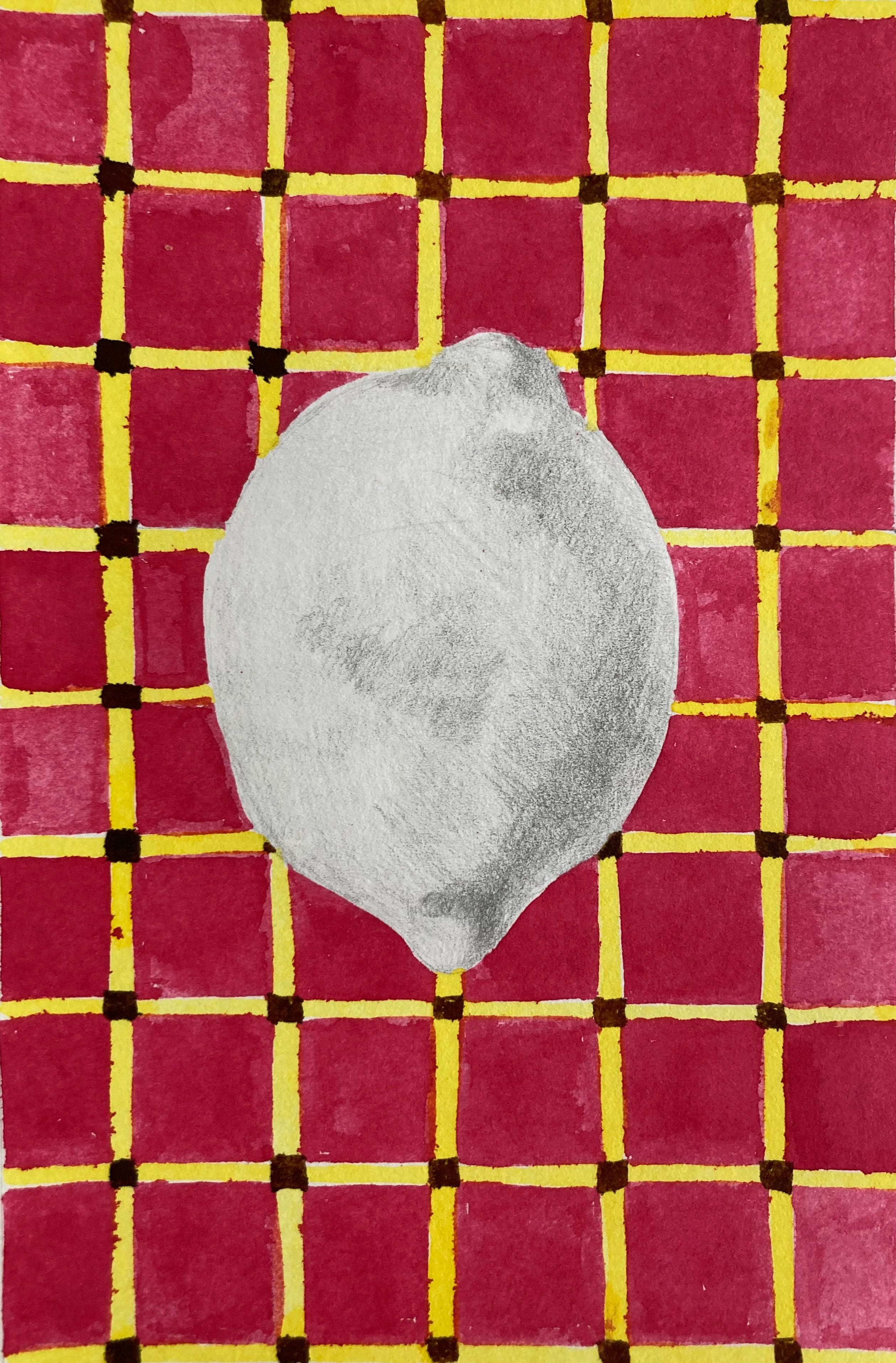
The lemon refuses its own colour. Rendered in with graphite, it floats as a grey ghost against the insistent grid of magenta and yellow. The lemon has stepped outside the warmth of its colour into something cooler. It could be a moon, or a stone shaped like a fruit. What remains when you take the yellow from a lemon? Its form persists, but it’s like ‘lemon-ness’ minus the lemon. The joke is that the grid supplies all the yellow the composition needs, yet none of it belongs to the fruit that should claim it. The lemon has given its colour to the background and kept only its shape.
What the still life has taught me is that attention is a form of love, and that love can be directed at things as well as persons. The objects do not need this care (take that, Bruno Latour!), but the painter needs to give it. In this sense, the still life is always a self-portrait, and ways of seeing are ways of offering attention, a signature as distinctive as any face. Tell me what you look at, and how long you look, and I will know something about who you are.